
A Brand We've Been Watching: Magda Butrym
Notes on romance with a sharper point of view.
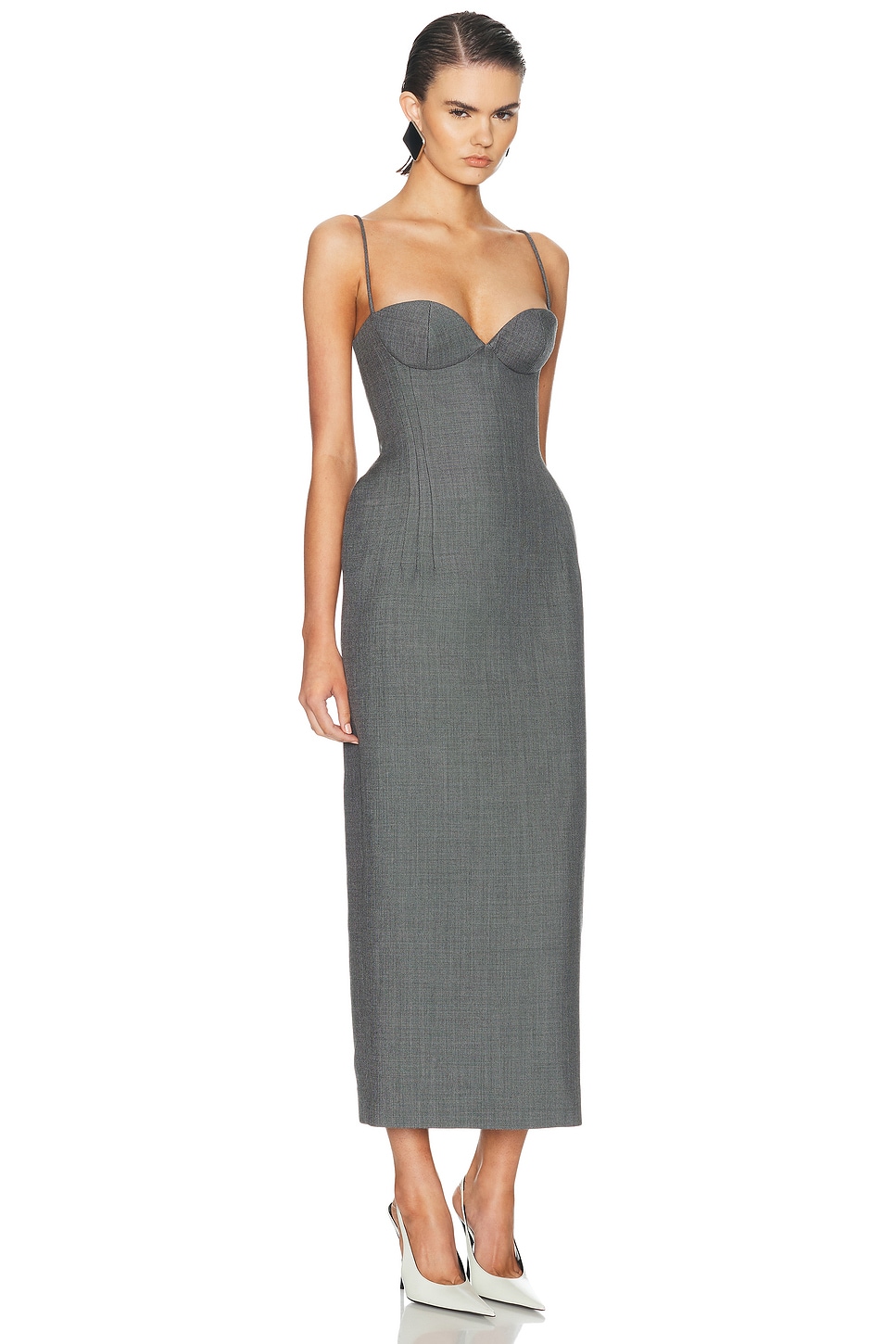
There is nothing particularly restrained about Magda Butrym — and that is precisely the point.
Since launching in Warsaw in 2014, the Polish label has developed a version of femininity that feels increasingly recognizable on sight. Corseted waists. Sculpted hips. Roses that appear oversized, dimensional, and unapologetically decorative. Dresses that seem to have been draped directly onto the body. Everything is romantic, but very little is delicate.
That distinction is what makes the brand interesting.
The clothes are feminine without ever feeling passive.
Magda Butrym tends to take the most traditionally feminine ideas in fashion — flowers, corsetry, silk, lace, hourglass proportions — and push them until they feel almost architectural. A rose becomes a sculpture. A bustier becomes the structure of the entire garment. A simple black dress is pulled, gathered, or shaped until the body itself becomes part of the design.
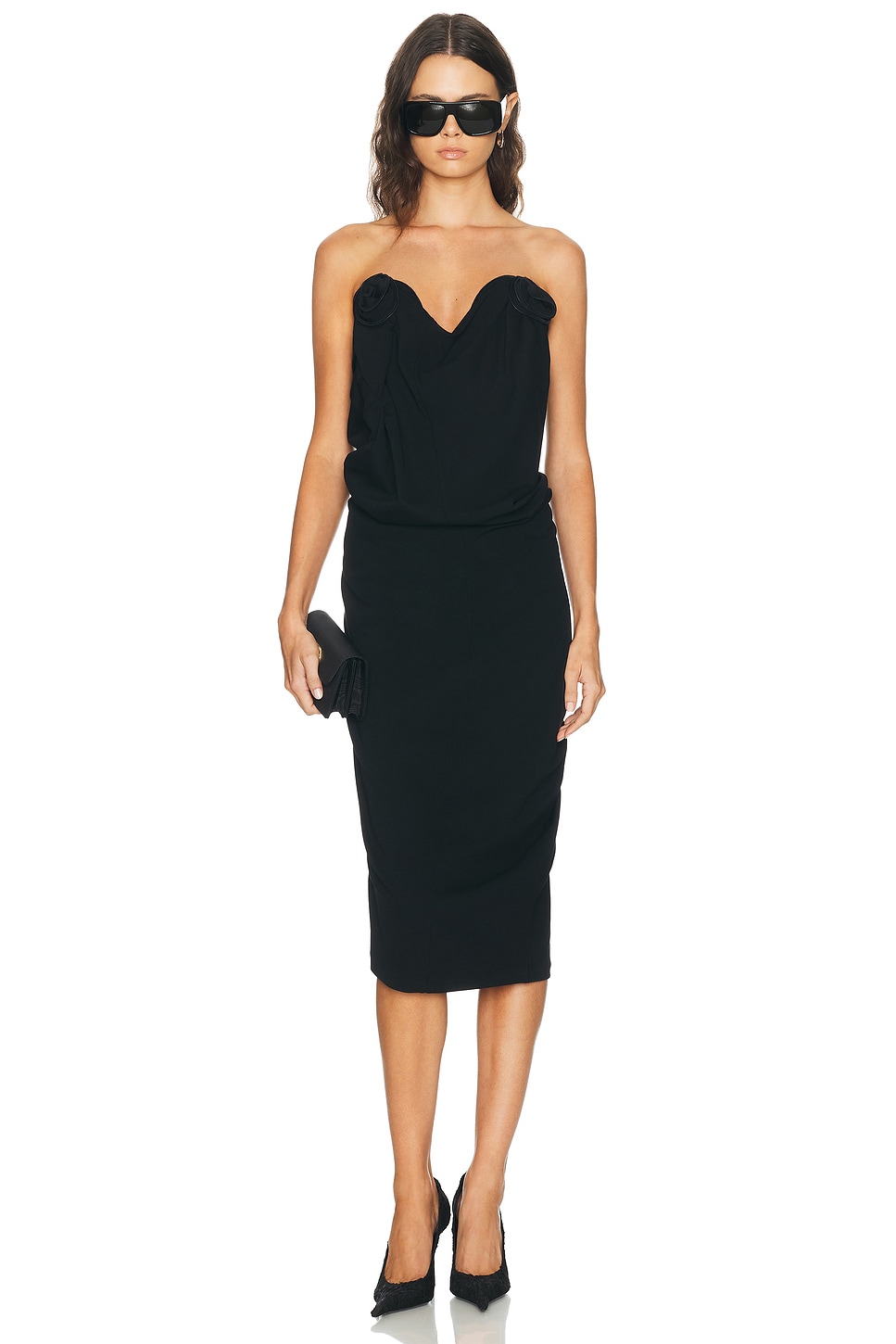
The Magda Butrym silhouette distilled: a defined bust, an exaggerated waist, and a shape that does not apologize for being overtly feminine.
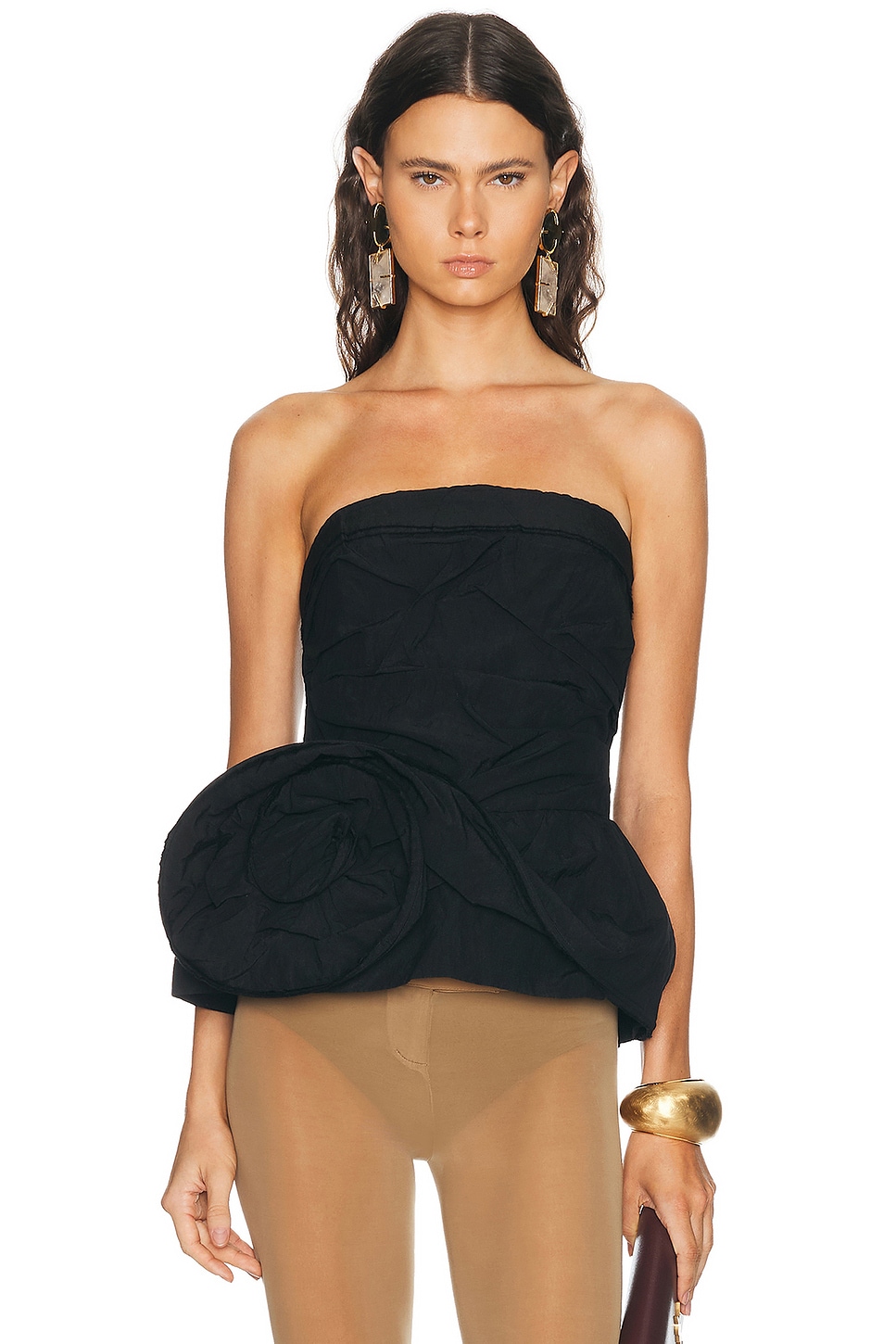
Corsetry as construction rather than decoration — structured, body-conscious, and strong enough to define everything worn with it.
It is an aesthetic that could easily become too much. Somehow, it usually doesn't.
The palette helps. Black, cream, chocolate, red, and muted neutrals give all of that romance somewhere to land. So does the tailoring. Underneath the flowers and draping is often a surprisingly controlled silhouette — a strong shoulder, a precise waist, a beautifully cut jacket.
That tension between decoration and discipline is where the brand is at its best.
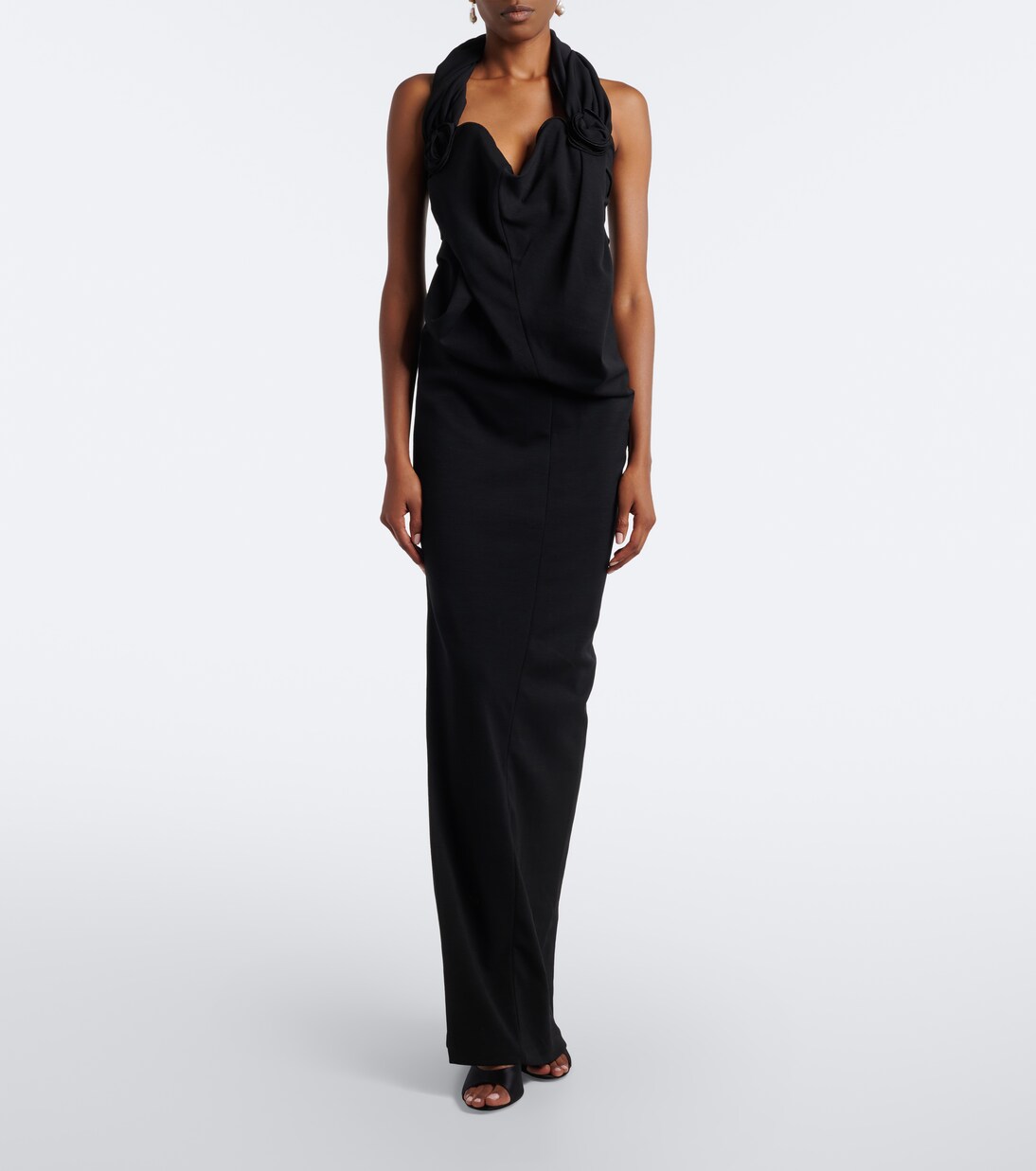
The rose becomes less an embellishment than part of the architecture. Romantic, certainly — but with enough scale and structure to keep it from feeling precious.
Roses have become one of the clearest signatures in the Magda Butrym vocabulary, appearing as appliqués, sculptural details, prints, jewelry, and three-dimensional additions to otherwise restrained silhouettes. In another context they might read sweet. Here they rarely do.
They are too large, too tactile, too intentional.
That is perhaps the most compelling thing about the brand's particular version of romance: it is never asking to be pretty in a conventional way. It is interested in glamour, but glamour with weight to it.
What has become even more interesting to watch is how well that language translates when the brand moves away from eveningwear. A jacket still has the waist. A knit still considers the body. Even quieter separates tend to retain something of the same attitude, which makes the brand feel like more than a collection of very good occasion dresses.
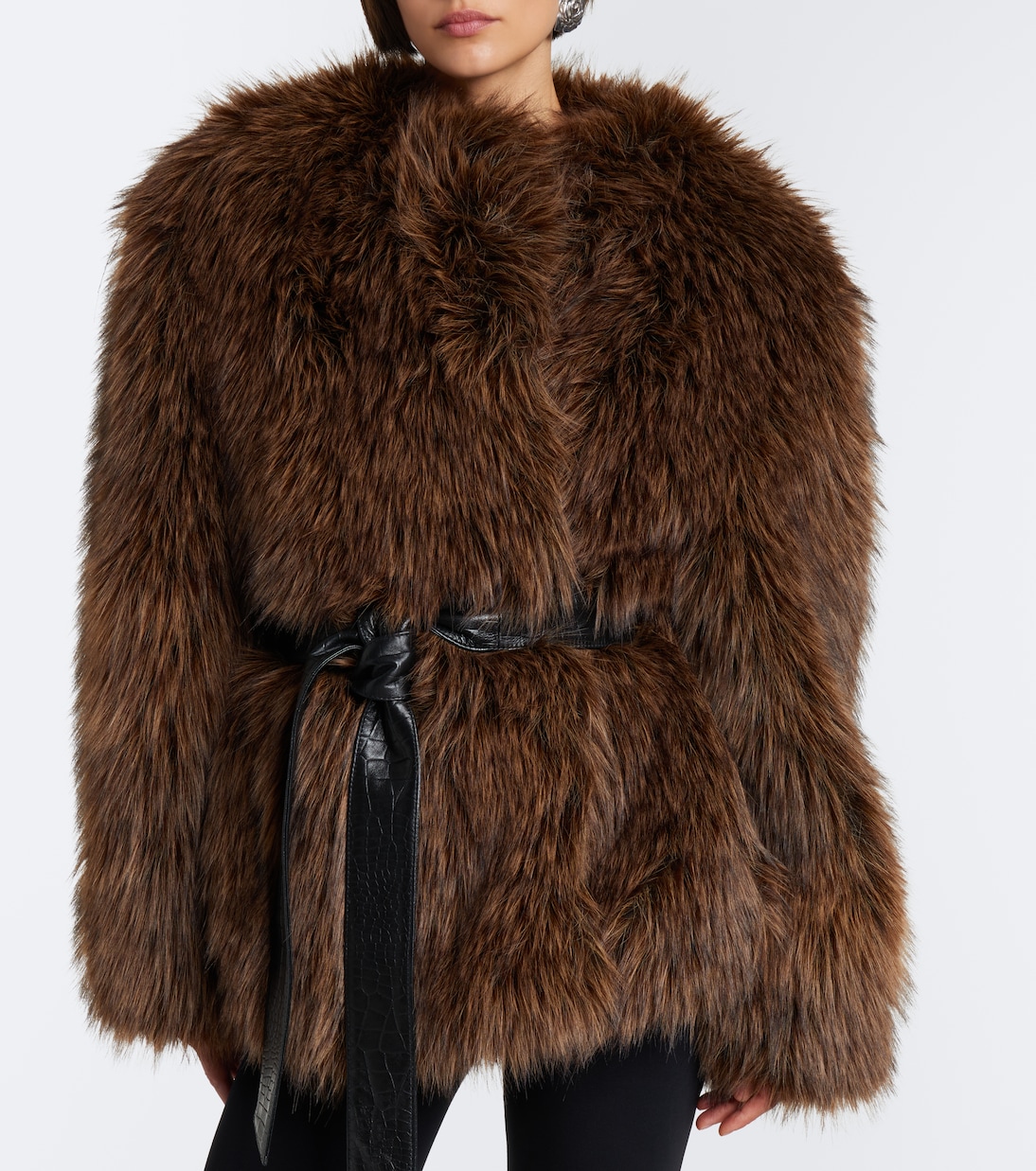
The quieter side of the label, but perhaps an even better demonstration of its point of view: tailoring that still understands the waist.
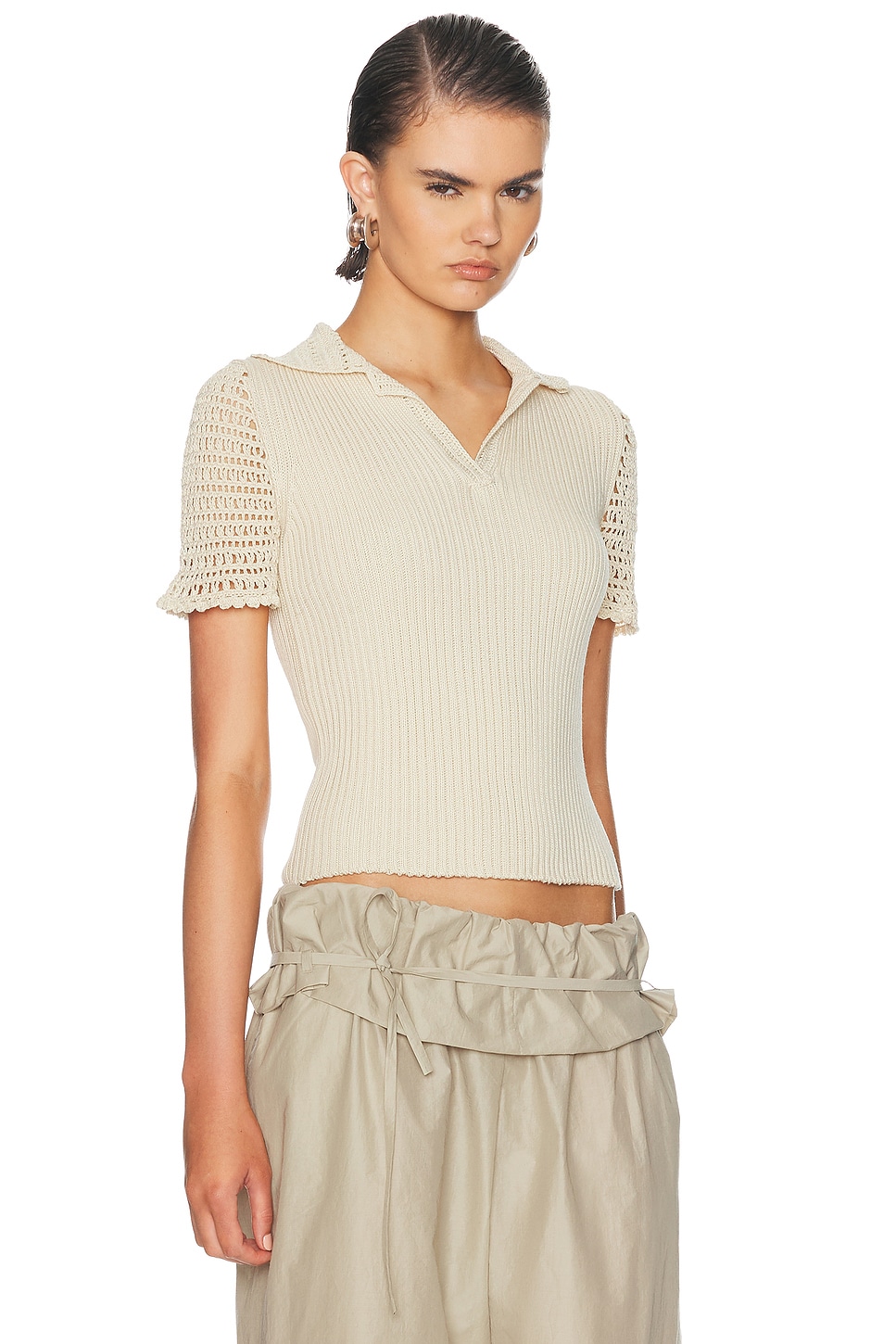
Proof that the point of view survives without the drama. A familiar staple reconsidered through proportion, fit, and an unmistakably feminine lens.
That matters because a strong brand should be recognizable even when its signatures are turned down.
Remove the rose and you should still understand the silhouette. Remove the evening setting and the clothes should still have a point of view. Magda Butrym increasingly does.
For Dispatch, the brand sits in an interesting place between romantic and severe, sensual and structured, statement-making and genuinely wearable. It does not participate particularly quietly in a wardrobe, but it does not need to.
There are plenty of brands making minimal clothes designed to disappear into everything you already own.
Magda Butrym is making the piece you build the rest of the outfit around.
Keep reading with us
Get the next edit before anyone else.
Guides, new arrivals and the pieces worth your money — no noise.